How We Built a High-Performance Blog on a Static Site Without a CMS
By Marios Manolakeris on August 20, 2025
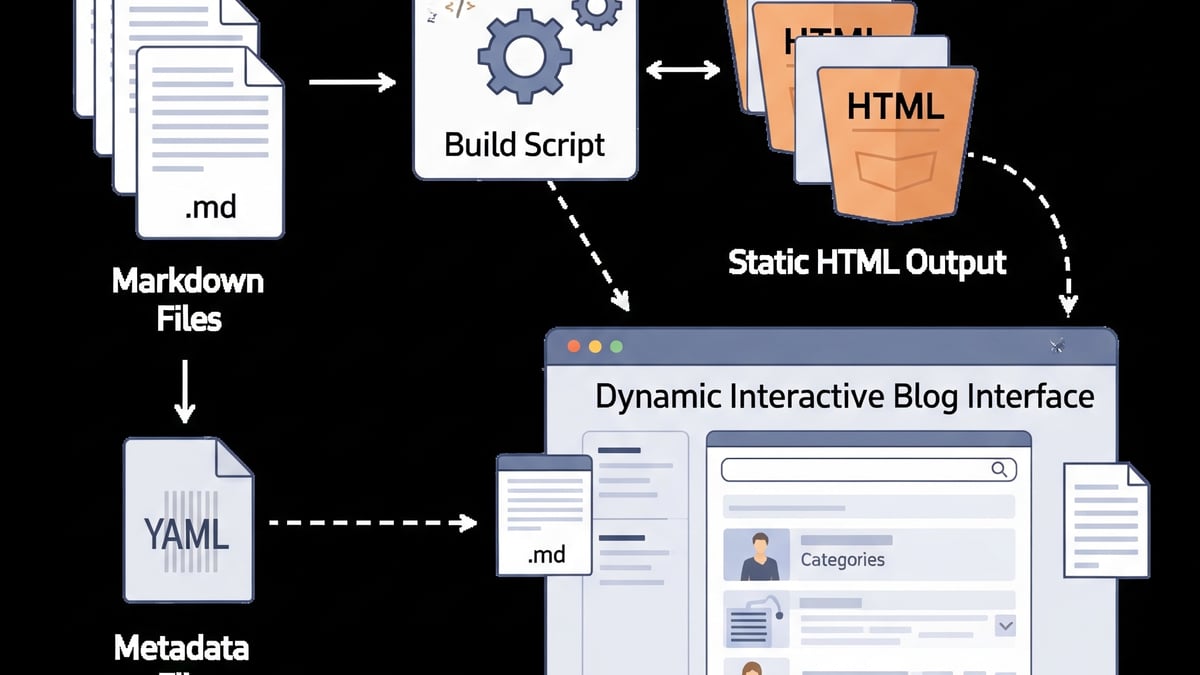
As an advocate for high-performance, secure, and low-maintenance web architectures, a static website was the obvious choice for manolakeris.com. However, this presented a classic engineering challenge: how do you integrate a rich, dynamic feature like a blog without compromising the core principles of a static site? The common solutions—a headless CMS, a separate WordPress instance, or a third-party platform—all introduced dependencies, potential performance bottlenecks, and a level of complexity I was determined to avoid.
My philosophy is to engineer robust, first-principles solutions that precisely fit the problem. In this spirit, I developed a custom "static-dynamic hybrid" blog system that provides a full-featured content platform without requiring a database, a separate CMS, or any changes to the core website's lean architecture. This article details the engineering behind that solution.
The Challenge: A Feature-Rich Blog on a Lean Foundation
The goal was clear: to build a blog that was not just a collection of articles, but a powerful content hub. The required features included:
- Dynamic filtering and real-time search across all posts.
- Featured post sections to highlight key content.
- SEO-friendly, static URLs for each individual article.
- A simple, Markdown-based writing workflow.
- Automated sitemap generation and metadata handling.
The constraint was equally clear: achieve all of this without adding a database, a complex backend, or the overhead of a traditional Content Management System.
The Engineered Solution: A Static-Dynamic Hybrid Model
The solution is a two-part system that leverages the best of static generation and client-side dynamic rendering. It’s an automated workflow that transforms simple Markdown files into a fast, interactive user experience.
Part 1: The Automated Build Process (The Static Generator)
The engine of our blog is a custom Node.js script that runs during the site's build process. This script is the "static" part of the hybrid, responsible for a few critical tasks:
- Parsing Markdown: The script scans a specified directory for Markdown files. Each file uses YAML front-matter at the top to define metadata like the title, category, and hero image.
- Generating Static HTML: For each Markdown file, the script generates a fully-rendered, static HTML page using a predefined template. This ensures every article has its own SEO-friendly, instantly-loading page.
- Image Optimization: Before generating the pages, the script automatically optimizes each post's hero image, resizing it to a consistent aspect ratio and compressing it for web performance.
- Creating a Metadata Index: This is the key to the hybrid model. The script compiles the front-matter from every single post into a single, lightweight JSON file. This file becomes the "database" for our dynamic front-end.
Part 2: The Dynamic Front-End (The Interactive Client)
The main blog page is where the "dynamic" part of the hybrid comes to life. A dedicated JavaScript file executes on the client's browser and performs the following actions:
- Fetching the Metadata: It makes a single, fast call to fetch the blog's metadata file.
- Rendering the Interface: Using this JSON data, it dynamically builds the entire blog interface—the featured post sections, the filterable category list, and the grid of all blog posts.
- Enabling Search and Filtering: Because all metadata is available client-side, the search and filter functions are instantaneous. There are no calls to a server or database. The script simply filters the JSON data and re-renders the post list in real-time.
This approach gives us the best of both worlds: the rock-solid performance and security of static HTML for individual articles, and the rich, interactive experience of a dynamic application for the main blog page.
The Outcome: Performance, Security, and Simplicity
By engineering a custom solution tailored to our specific needs, we created a blog system that perfectly aligns with the core values of the consultancy:
- Blazing Fast Performance: Both the main blog page and individual articles load instantly, as they are either dynamically rendered from a small JSON file or served as pure static HTML.
- Enhanced Security: With no database and no complex backend, the attack surface is dramatically reduced.
- A Simple, Git-Based Workflow: Writing a new post is as simple as adding a new Markdown file and running the build command. The entire content history is managed through Git.
- Zero Maintenance Overhead: The system requires no updates, no security patches, and no database management.
This project is a perfect example of how I approach web development: by understanding the core requirements and engineering a clean, efficient, and scalable solution from first principles. This same philosophy is applied to all of my Digital Presence services, from the streamlined LaunchPad package to a fully integrated Growth Engine.
If your business is struggling with a slow, cumbersome, or insecure website, it might be time for a more engineered approach. Schedule a free consultation today, and let's discuss how a custom digital presence can become your most valuable asset.
About the Author

Marios Manolakeris
I help businesses in the Netherlands automate their operations and build powerful digital assets. Learn more.
Read Next
-
How to Build a Lead-Generating Digital Presence in the Netherlands
August 18, 2025
-
5 Signs Your Scale-Up is Ready for AI-Powered Automation
August 17, 2025